
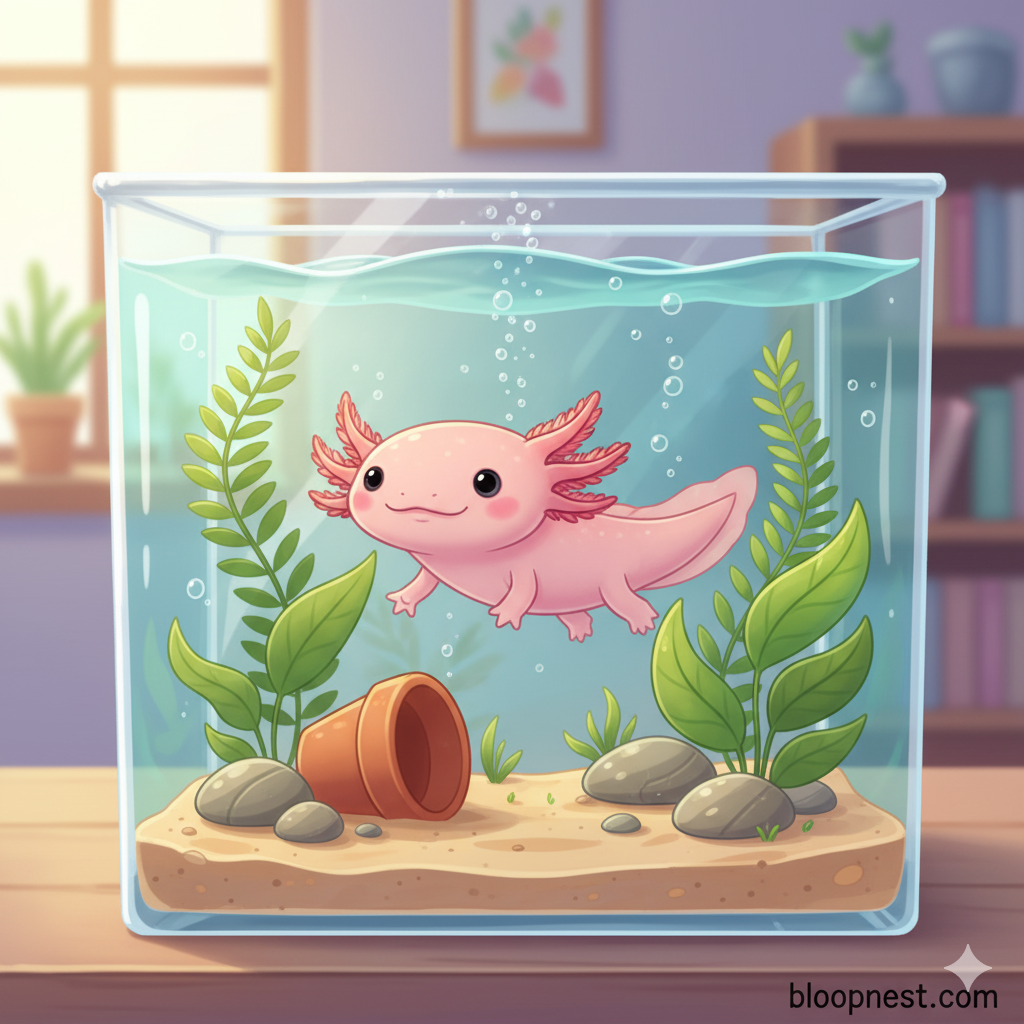
The Complete Guide to Owning an Axolotl Pet
If you’ve ever wanted a pet that’s truly out of the ordinary, an axolotl might just be your perfect match. Often called the “Mexican walking fish,” axolotls aren’t fish at all—they’re fascinating amphibians famous for their ability to regenerate limbs. Calm, low-maintenance, and endlessly intriguing, these unique pets can bring a whole new level of wonder to your home aquarium.
In this guide, I’ll walk you through everything you need to know about keeping an axolotl pet—from setting up their habitat and feeding them right, to health care and finding reputable sources. Whether you’re new to the hobby or a seasoned aquarist, this guide will help your axolotl thrive.
What Exactly Is an Axolotl?
Axolotls (Ambystoma mexicanum) are aquatic salamanders native to the lakes near Mexico City. Unlike other amphibians, axolotls stay in their larval form their whole lives—a phenomenon called neoteny. This means they never fully turn into terrestrial adults and keep their external gills, staying aquatic forever.
They’re instantly recognizable thanks to their wide, “smiling” mouths, feathery gills, and relaxed personalities. Axolotls come in several color varieties:
- Wild-type: Dark with gold speckles
- Leucistic: Pinkish-white with red gills
- Albino: Creamy white with light eyes
- Melanoid: Solid dark color
Owning a Mexican axolotl pet isn’t just about having a beautiful, exotic animal—it’s a chance to observe one of nature’s most fascinating regenerative creatures up close.
Why an Axolotl Makes a Great Pet
You might wonder why someone would choose an axolotl over a more common pet. Here’s why they’re becoming increasingly popular:
- Calm and Low-Stress: Axolotls are peaceful and don’t need constant handling, making them perfect for a quiet tank environment.
- Fascinating Behavior: Watching them glide through water, hunt, or interact with tank decor is endlessly entertaining.
- Educational Value: Their regenerative abilities make them a living lesson in amphibian biology.
- Longevity: With proper care, axolotls can live 10–15 years, offering a long-term companionship.
For those looking for a unique, low-maintenance pet that’s both educational and captivating, an axolotl pet is an excellent choice.
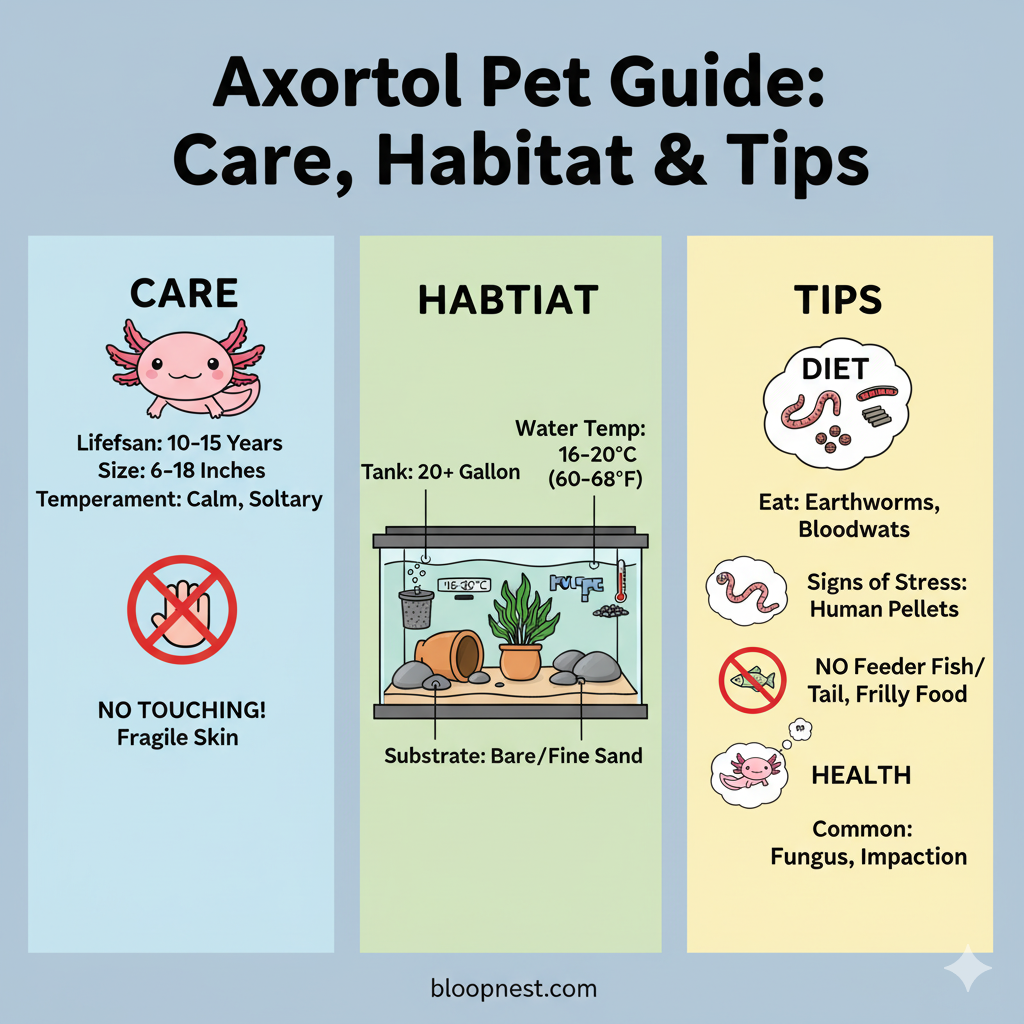
Setting Up the Perfect Axolotl Habitat
A proper tank setup is essential for a healthy and happy axolotl. Here’s what you need to know:
Tank Size
- Minimum 20 gallons for a single adult.
- Bigger is always better if you plan to keep multiple axolotls—they love to swim freely.
Water Conditions
- Temperature: 60–68°F (16–20°C); avoid above 75°F.
- pH Level: 6.5–8.0, ideally neutral.
- Filtration: Use a gentle filter—strong currents stress axolotls.
Decor and Substrate
- Fine sand or a bare-bottom tank is safest; gravel can be swallowed and cause blockages.
- Provide hiding spots using caves, PVC pipes, or aquarium-safe decorations.
- Live plants are optional; choose hardy species that tolerate cooler water.
Lighting
Axolotls don’t need bright lights. Moderate lighting with shaded areas works best, letting them feel secure.
A well-thought-out habitat is the foundation for a thriving axolotl pet.
Feeding Your Axolotl
Axolotls are carnivores and thrive on protein-rich foods:
- Worms: Earthworms, blackworms, bloodworms
- Pellets: Specialized axolotl pellets
- Frozen Foods: Brine shrimp, daphnia, small fish (occasionally)
Feeding Tips:
- Juveniles eat daily; adults 2–3 times per week.
- Avoid overfeeding—obesity can be dangerous.
- Remove uneaten food to maintain water quality.
A balanced diet keeps your axolotl healthy, active, and vibrant.
Health and Care Tips
While hardy, axolotls need proper care to prevent health issues:
- Skin Infections: Often caused by poor water quality or injuries.
- Fungal Infections: Look for white cotton-like patches.
- Stress: Avoid high temperatures, strong currents, and aggressive tankmates.
Pro Tips for Healthy Axolotls:
- Change 20–30% of the tank water weekly.
- Monitor temperature and cleanliness.
- Handle gently and sparingly to reduce stress.
With consistent care and attention, your axolotl can live a long, healthy life.
Breeding Axolotls (Optional)
For advanced keepers, breeding can be rewarding. Females lay hundreds of eggs that hatch in 2–3 weeks. Juveniles need tiny foods like baby brine shrimp and should be kept in separate tanks to avoid cannibalism. Breeding should only be attempted by those who fully understand axolotl care.
Finding Axolotls for Sale
If you’re ready to adopt, it’s important to buy from trustworthy sources:
- Breeders: Offer healthy, captive-bred axolotls with guidance.
- Pet Stores: Availability varies; quality may differ.
- Online Sellers: Check reviews and shipping guarantees.
Popular types include Mexican, leucistic, albino, and melanoid. Prices usually range from $20–$100, depending on age and rarity. Always confirm legal ownership in your area.
FAQ About Axolotls
Are axolotls good pets?
Absolutely! They’re calm, low-maintenance, and fascinating to watch, making them ideal for anyone seeking a unique aquatic companion.
Can you legally own an axolotl as a pet?
Yes, in most areas. Always check local regulations first. With the right tank setup, feeding, and water care, an axolotl can thrive for many years.